LED panels for wearable projects come in two main form factors: flexible and rigid. The right choice depends on where you are mounting the panel, how much weight you can add, and whether the surface is flat or curved.
Quick Comparison
| Feature | Flexible LED Panels | Rigid LED Panels |
|---|---|---|
| Thickness | Under 2mm | 3 to 8mm |
| Weight | Under 30g | 80 to 300g |
| Surface conformity | Bends to gentle curves | Flat surfaces only |
| Mounting options | Velcro, hot glue, tape, sewing | Screws, brackets, glue |
| Durability | Good for wearable use | Very durable (industrial grade) |
| Resolution | Moderate (12x48 or 16x32) | High (up to 64x64 and beyond) |
| Brightness | Good for indoor and convention use | Very bright (outdoor visible) |
| Power | Built-in rechargeable battery | External power required (5V to 12V) |
| Price range | $25 to $40 | $15 to $100+ (panel only) |

When Flexible Panels Win
Flexible LED panels are the better choice for:
- Helmets, visors, and curved surfaces
- Body-worn displays (chest, arm, back)
- Projects where weight matters
- Builds where you need the panel to be barely visible when off
- Quick setup (built-in battery and controller)
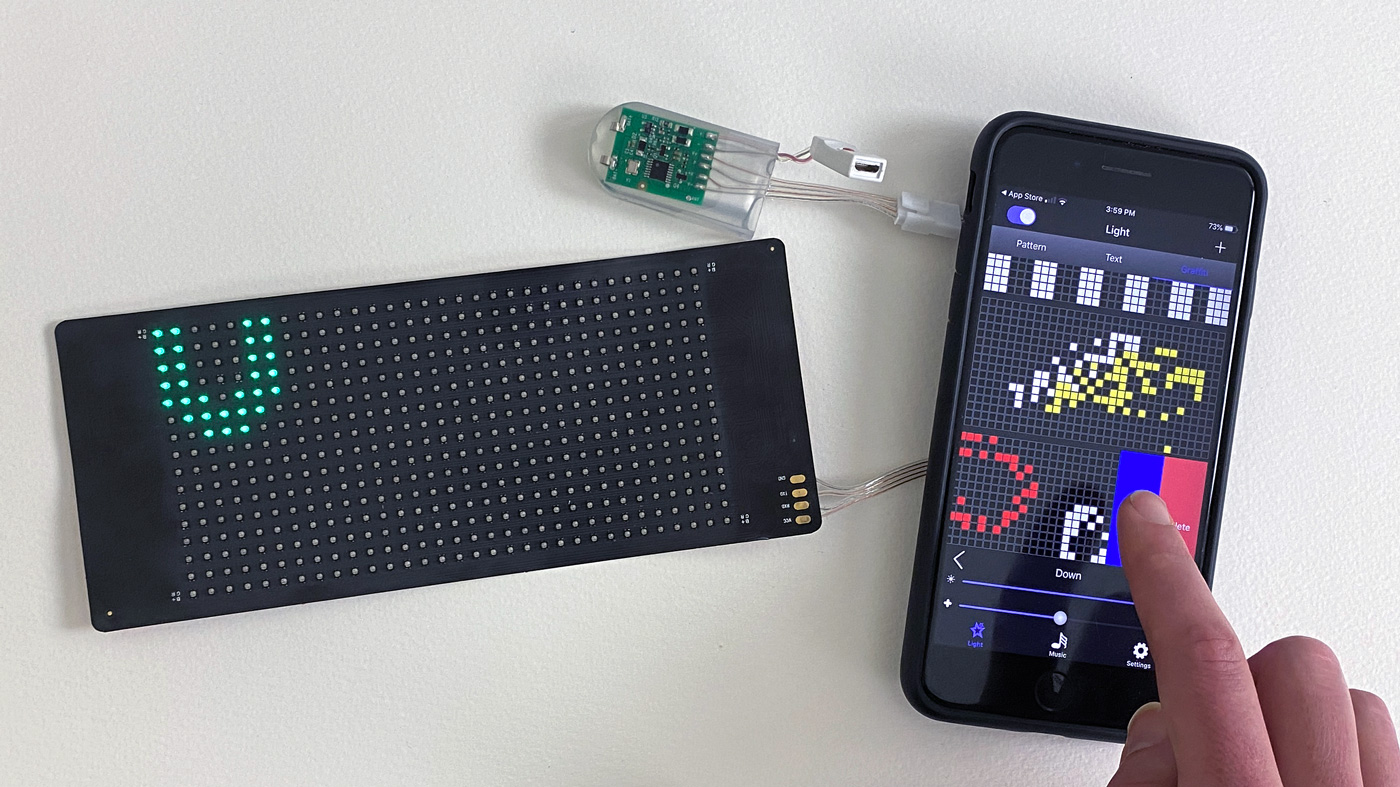
The Wearable Tutorials Paper Thin LED Matrix is a flexible panel designed specifically for these use cases. It weighs under 30 grams, bends to conform to helmet curves, and comes ready to use with a rechargeable battery and Bluetooth app.
When Rigid Panels Win
Rigid LED panels are the better choice for:
- Flat-face builds (TV head costumes, prop screens)
- Stationary displays and signage
- Projects where maximum brightness and resolution matter
- Builds with external power (wall outlet or large battery)
- Multi-panel tiled displays
The Wearable Tutorials Large Square LED Matrix is a rigid panel option for builds that need a bigger, brighter display on a flat surface.
For Wearable Projects, Flexible Usually Wins
Most costume and cosplay builds involve curved surfaces, tight spaces, and the need to keep weight down. Flexible panels fit naturally into helmets, conform to body armor, and add almost no weight. Rigid panels are excellent for stationary displays and flat-face builds, but they limit your mounting options on curved or body-worn projects.
Bottom Line
For wearable and costume projects, start with a flexible panel. Switch to rigid only if you need a flat-mounted display with maximum brightness or resolution beyond what flexible panels offer.
Wearable Tutorials is part of the Lumen Couture studio, the same fashion-tech team behind our ready-to-wear illuminated designs.